Showing posts with label coming-of-age. Show all posts

Friday, 25 April 2014

V... is for Victorian Literature

I spoke of the lofty thoughts and ideals of Romanticism earlier. This period was followed by the reign of Queen Victoria in Britain, from 1838 to 1901 and this period produced some very significant literary works that I'm required to study. While poetry was the most important form with the Romantics, the novel, as we now know it, became the leading literary genre in the Victorian times. Some of the noteworthy novelists of this period include Dickens, Eliot, the Bronte sisters, and Hardy. There were some great poets too - Browning, Yeats, and Tennyson.
From wiki, I have, "Victorian novels tend to be idealised portraits of difficult lives in which hard work, perseverance, love and luck win out in the end; virtue would be rewarded and wrongdoers are suitably punished. They tended to be of an improving nature with a central moral lesson at heart. While this formula was the basis for much of earlier Victorian fiction, the situation became more complex as the century progressed. There was a struggle to conquer the flaws of human beings with great virtues. It was a principle that those who struggle to attain morality would most probably achieve positive results in the end if not tortured by natural circumstances or evil vices."
Though this period produced a vast array of works, their common themes made them cluster together as the kind of things the reader at the time wished to read. My personal favourite is Dickens, I have read all of his novels barring a couple, and there is something about the way he writes that draws me to the novels.
*****************************************************
This is the twenty-second post for the April A-to-Z Blogging Challenge 2014.
Previously, Archaism, British literature, Critical Analysis, Drama, Edinburgh, Faust, Gothic Fiction, Humour, Interpretation, Journalling, Keats, Language, Metaphysical Poetry, Narration, Ode, Papillion(ed), Quatrain, Romanticism, Shakespeare, Tone, University

Wednesday, 16 April 2014

N... is for Narration

Narration is everything! Isn't it? Think about it, when you begin reading a book and there is a host of different characters, the author has the option of telling the story through one or many voices. This directs how the story is told, what the voice sounds like, and to a large extent even determines the tone of the novel. What could be a happy ending from the point of view of one of the characters could be a very tragic, or at the very least, a disappointing end for another.
Sometimes, multiple narrators annoy me. Wuthering Heights and My Name is Red, for example, failed me because too many people were speaking one by one and there wasn't a single point from which to approach the story. However, I make an exception for Treasure Island, what a tale! Dual narrations are good, though. Look at Gone Girl, look at Kafka on the Shore, both lovely examples of fabulous books. And then there's the autobiographical, the way Ralph tells the story in Coral Island, the voice of Dr Watson in Sherlock Holmes novels is unparalleled. No one tells a tale like they do. I also like the withheld information mystery, like the name of the second Mrs de Winter in Rebecca and the professor's young wife in Orkney. What kind of narratives do you like?
*****************************************************
This is the fourteenth post for the April A-to-Z Blogging Challenge 2014.
Previously, Archaism, British literature, Critical Analysis, Drama, Edinburgh, Faust, Gothic Fiction, Humour, Interpretation, Journalling, Keats, Language, Metaphysical Poetry

Friday, 11 April 2014

J... is for Journalling

One of the best ways to study a theoretical subject is by journalling. The art of taking down personal notes date-wise and cross-referencing them by topic is very valuable. Doing a Masters is not only about studying large volumes of text, it is also about knowing how to study. I usually write things out a lot. I find it easier to remember things when they are written down. I also find it easy to memorise passages, names of critics etc, when I have written them down once or twice.
I tend to number pages of my notes and make tables of contents. I don't use highlighters or sticky-notes though. When we were growing up, they didn't really exist and I never learnt how to use them to optimise my work. And I find them distracting. So I stick to good old pens of different colours, pencils, the likes.
Do you miss studying in the old fashioned way?
*****************************************************
This is the tenth post for the April A-to-Z Blogging Challenge 2014.
Previously, Archaism, British literature, Critical Analysis, Drama, Edinburgh, Faust, Gothic Fiction, Humour, Interpretation

Friday, 26 April 2013

W... is for Writers' Museum, The

This is by far the best museum I have been to. Dedicated to the lives of  Robert Burns, Sir Walter Scott and Robert Louis Stevenson, the three of the greatest Scottish writers. There are, of course, painting and sculptures, but there's also memorabilia - their desks, their pens, shoes even.
There are tales of how their greatest works came to be, their stories, inspirations, and thoughts. Lives of these men are brought out in a beautiful collection of objects that were related to them. I grew up reading Kidnapped, Treasure Island, and Stevenson's poetry, some of my favourite childrens' works ever! And for me to visit this place was like taking a spin in a time machine and coming face-to-face with my ten year old self.
I loved it! And the courtyard in front of it has their immortal words and the works of other famous authors set in stone. How lovely!


-----------------------------------------------------------------------------------------------------------
This post is part of the ongoing A-to-Z Challenge. Previously, AyeBerwickCramondDisabilityEdinburghForth BridgeGlasgowHamishIsle of SkyeJohn o' GroatsKirkLoch Lomond and LussMogwaiNecropolisOld Man of StorrPortobelloQueen of ScotsRobert BurnsStirlingTantallon CastleUrquhart Castle, Venison.

Saturday, 20 April 2013

R... is for Robert Burns!

Scotland's favourite son, The Bard of Scotland, The National poet... are some of the titles Burns has earned over the years. I had read very little of Burns before I got here, only having perused his most famous works. I have been reading some more now that I've been around a bit of Scotland and can see what inspired him; and man, is he brilliant!
I'm not in the mood to write much today, so I'll leave you with some wonderful poetry and my favourite version of Auld Lang Syne


Scots, wha hae wi' Wallace bled,
Scots, wham Bruce has aften led,
Welcome to your gory bed,
Or to victorie.
Now's the day, and now's the hour;
See the front o' battle lour;
See approach proud Edward's power,
Chains and slaverie.
'Robert Bruce's March to Bannockburn'

My heart's in the Highlands, my heart is not here;
My heart's in the Highlands a-chasing the deer;
Chasing the wild deer, and following the roe,
My heart's in the Highlands, wherever I go.

Wee, modest, crimson-tippèd flow'r,
Thou's met me in an evil hour;
For I maun crush amang the stoure
Thy slender stem:
To spare thee now is past my pow'r,
Thou bonie gem.
'To a Mountain Daisy'

The following is my favourite version because this thing in the video is exactly what I'd do for a friend. And people who have heard me sing this like it :)


-----------------------------------------------------------------------------------------------------------
This post is part of the ongoing A-to-Z Challenge. Previously, AyeBerwickCramondDisabilityEdinburghForth BridgeGlasgowHamishIsle of SkyeJohn o' GroatsKirkLoch Lomond and LussMogwaiNecropolisOld Man of Storr, Portobello, Queen of Scots.

Friday, 12 April 2013

K... is for Kirk!


Kirk is the Scottish word for Church, and oh my, do they build them well here! As part of tourism, various volunteering activities, and just being poor because I'm a student, I've been to a lot of kirks here. Usually, they would have been built by one king or another queen, either for their own private prayers or as part of a celebration/coronation.
For example, St. Margaret's Chapel, which was probably a personal prayer house, is the oldest surviving structure in Edinburgh, having been built in the 12th century. On the other hand, built during the same period is the massive 'High Kirk of Edinburgh' or St. Giles' Cathedral. It was primarily built for public use and is also called the 'Mother Church of Presbyterianism'.
I've been to both... and while I've been to some other too, these two, visited within two weeks of one another brought out some stark similarities; the damp cold stones, the beautifully carved/painted ceiling, the quiet that is mildly perturbed by the whispers of centuries, the altar... very very imposing facades that house God in all his marvellous glory. I'm not religious at all, but because I went to a convent Catholic followed by a missionary Methodist school, I had my fair share of Jesus storied drilled into me.
Visiting kirks is, thus, a beautiful way to spend an afternoon here.

Stained Glass - St. Giles'

Ceiling - St. Giles'

Chapel at my school - it was a beautiful building wasted on a terrible school.

-----------------------------------------------------------------------------------------------------------
This post is part of the ongoing A-to-Z Challenge. Previously, AyeBerwickCramondDisabilityEdinburghForth BridgeGlasgowHamishIsle of Skye, John o' Groats.

Monday, 30 April 2012

Z

Z is for 'Zhivago'.
I love Russian authors, I love the way they write. I'm fascinated by their lifestyle, their cold cold days and lands, their women, their courage. I'm still reading Dr. Zhivago. But I'm already in love with it. It begins with a funeral scene, a small boy, and his uncle. It goes on... with the Russian Revolution as a backdrop. Did you know that the author was awarded the Nobel? And did you know he refused it? I'm looking forward to keep at reading it and trying to find a way into the author's head... all those years past...

Everything Russia seems... cold and blue


I'm writing every day of April for the A-to-Z April Blogging Challenge 2012. I'm writing of characters of fiction that are immortal and touch hundreds of lives everyday...

PS: Ladies & Gentlemen, it has been a real pleasure being on this journey with you!

Friday, 27 April 2012

X

X is for ‘Xenophilius’.
‘Xenos’ and ‘phile’ – the lover of the strange…
He is the father of Luna Lovegood in the Harry Potter books. He is the editor of ‘The Quibbler’ and lives in a rock-shaped house. His magazine mostly prints out-of-the-world unbelievable things but as the stories begin to emerge in weirder ways, we find that sometimes, he does print sense. He’s never accepted as normal or mainstream and because of his beliefs, even his daughter Luna is considered to be a weirdo. Although, they both are very courageous, I admit. I’ve always felt that his character was dubious, sometimes good and sometimes not so much. I had not, in fact, even thought of him until a fellow blogger suggested it. Lover of strange things, indeed!

Candyfloss textured hair... seriously?!


I'm writing every day of April for the A-to-Z April Blogging Challenge 2012. I'm writing of characters of fiction that are immortal and touch hundreds of lives everyday...

Thursday, 26 April 2012

W

W is for ‘Watson’.
The dear man, who assisted Holmes like an assistant would, cared for him like a friend, and brought him cases like an agent. Dear Dr. Watson, who was forever overwhelmed, like us readers, by Holmes’ extraordinary powers of observation and deduction. ‘Elementary’ that wasn’t elementary at all. He even saved or almost saved Holmes a few times. But for him, we would never have heard of those brilliant tales. I’ll keep this post till here, it’s been a long day.

Holmes and Watson (Sidney Paget)

So far: Atticus, Beth, Cassius, Dumbledore, Estella, Francesca, Gandalf, Humbert, Ishmael, Jean-Baptiste, Kali, Long John Silver & Lisbeth, Miu, Nancy, Oliver, Piyali, Quentin, Rebecca, Scarlett, Tita, Ursula, Valhalla

I'm writing every day of April for the A-to-Z April Blogging Challenge 2012. I'm writing of characters of fiction that are immortal and touch hundreds of lives everyday...

Monday, 23 April 2012

T

T is for ‘Tita’.
She is the protagonist of a book that should be better known, Like Water for Chocolate. It is a strange book with a strange name and an even stranger theme. The plot is simple, a man not allowed to marry his loved one Tita, marries her elder sister Rosaura so that he can be around the one he loves. I like themed books, the kinds that have a single theme running across all chapters, sort of like a spine to the book. In this case, the theme was Mexican cooking. Every chapter began with a list of ingredients for a dish and the events in that chapter somehow managed to give the entire recipe within it. Not once was there a disconnect, not once did the pace falter. Now that’s powerful writing.
Tita is obsessed with cooking and her dishes are delicious. There is a scene in which she is baking the cake for Rosaura’s wedding with her love, Pedro and her copious tears mix with the icing. Everyone that eats the cake is overcome with an eerie sense of infinite longing.
At times though, the magic realism foes into an overdrive and things are too strange to be true. I definitely recommend this book, not if you’re looking for classic magic realism; but more if you’re looking for a beautiful love story and a very unusual narrative. And of course, if you want to whip up some delicious Mexican!


From the movie, Tita, cooking


So far: Atticus, Beth, Cassius, Dumbledore, Estella, Francesca, Gandalf, Humbert, Ishmael, Jean-Baptiste, Kali, Long John Silver & Lisbeth, Miu, Nancy, Oliver, Piyali, Quentin, Rebecca, Scarlett


I'm writing every day of April for the A-to-Z April Blogging Challenge 2012. I'm writing of characters of fiction that are immortal and touch hundreds of lives everyday...

Saturday, 21 April 2012

S

S is for ‘Scarlett’.
What a girl, what a woman! She is the epitome of womanhood. A match of strength for every Rhett, a match of folly for every Ashley… This O’Hara is beautiful, brave, cruel, and brilliant. So what if Rhett left her (I do not think that the sequel to Gone with the Wind counts); she was no left weak. No when he played with her, not when he loved her. Bonnie’s death was Rhett’s fault. Period.
Scarlett needed a different man, she didn’t need a charmer, she didn’t need a fool. She was ahead of her times and men just couldn’t catch up with her. Ever since I’ve read the book five years ago, her words have given me strength on many a hopeless day. Whenever faced with trials and tribulations, judgment, loss, and despair; she always believed:
"After all... tomorrow is another day!"


Vivian Leigh as Scarlett O'Hara


I'm writing every day of April for the A-to-Z April Blogging Challenge 2012. I'm writing of characters of fiction that are immortal and touch hundreds of lives everyday...

Thursday, 19 April 2012

Q

Q is for 'Quentin'.
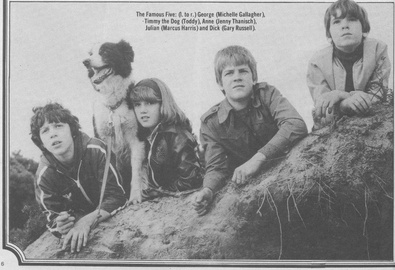
Darling Uncle Quentin, crazy and adorable. The Famous Five, the most brilliant Enid Blyton, these names will only fill my heart with joy and bring to mind glorious summer days of childhood, emulating the children in the book. We rode bicycles, hiked out in the sun, splashed water on the beach, camped out in the crannies of fallen trees; yes, I grew up in a seaside town...
Quentin, father of George and uncle to Julian, Dick, and Anne, was a crazy scientist. He hated loud noises made by kids, the ruckuc of nighttime escapades, and the loud barking of Timmy, the dog. Every family has a Quentin, the immersed in work and lost to the world character. He loved his family, especially his wife Fanny, but he just couldn't cope with interruptions in his intense calculations.
While the kids nabbed wicked criminals and solved mysteries, Uncle Quentin was lost, with his head in the clouds! Every kid must be fed on a diet of at least one Enid Blyton a month for 3 - 4 years!

George, Timmy, Anne, Julian, and Dick


I'm writing every day of April for the A-to-Z April Blogging Challenge 2012. I'm writing of characters of fiction that are immortal and touch hundreds of lives everyday...

Tuesday, 17 April 2012

O

O is for ‘Oliver’.

I read Oliver Twist a long time ago, when I was a child myself. I was horror-struck by the little orphan’s life in a massive city like London. He endures a miserable existence in a workhouse and is then placed with an undertaker. He also meets the Artful Dodger, leader of a gang of juvenile pickpockets. Oliver is led to the lair of their elderly criminal trainer Fagin, naively unaware of their unlawful activities.

Apparently, in the Dickens era, there were a large number of orphan kids found around London, something that led to The Waif Crisis. Eventually, of course, all is well. The criminals are behind bars and the awful people are reduced to the same sordid conditions that they had subjected little kids to. Dickens is dark, but not the kind of dark that only adults can deal with. Characters like Oliver, David Copperfield, Pip are ones that children should be exposed to. It is a good way to acquaint them to the real world, which has people like Estella, Fagin, and Pegotty.


Oliver in the cruel warehouse


I'm writing every day of April for the A-to-Z April Blogging Challenge 2012. I'm writing of characters of fiction that are immortal and touch hundreds of lives everyday...

Monday, 16 April 2012

N

N is for 'Nancy'.
Nancy Drew, who else!? The smart, intelligent, fantabulous young sleuth from River Heights; the epitome of modern girls. The champ driver, swimmer, actor of a girl that gave rise to one of the most widely sold Young Adult books. The hundreds of books, written by different people, were published under the common pseudonym of Carolyn Keene. Nancy, along with her friends Bess and George, sometimes her boyfriend Ned, nabs some pretty obnoxious criminals.
I spent some 3 - 4 years of middle school devouring these books one after another. And I think all little girls should have wonderful girl inspirations. And Nancy was one such... I loved her intelligence and her wavy blond hair; her powers of deduction and the blue convertible. Good days... simple days...


So far: Atticus, Beth, Cassius, Dumbledore, Estella, Francesca, Gandalf, Humbert, Ishmael, Jean-Baptiste, Kali, Long John Silver & Lisbeth, Miu

I'm writing every day of April for the A-to-Z April Blogging Challenge 2012. I'm writing of characters of fiction that are immortal and touch hundreds of lives everyday...

Thursday, 5 April 2012

E

E is for 'Estella'.
She is a very strange girl. The heroine of 'Great Expectations' is a mightily strange girl. She's the protege of Miss Havisham, who stopped her clocks (and her life) when she was jilted by her fiance on her wedding day. Estella takes care of her and practically runs the house while Miss H sulks in her God-knows-how-old wedding dress.
So, Estella has been part of a mentally abusive and sick household. Understandably, she hates men. But her behaviour towards Pip (the protagonist) is decidedly bizarre! I am a huge Dickens fan, but I truly believe that Estella could've been a bit more normal. Marrying Pip's rival Bentley was seriously a little too much for me to take. She was beautiful and rich, why did she have to be so mean!?
Read more about the book here.

Miss Havisham & Estella

Wednesday, 4 April 2012

D

D is for 'Dumbledore'.
Well, to be honest, when I noted down the names of characters from A to Z, that I'd be covering here; D was for Darcy. But, I'd never been crazy about Darcy, I didn't know why all the girls used to be fussing over him all the time. And let's admit it, compared to the greatest wizard that ever lived, what's a mere muggle!

Dumbledore was a grandfather figure, except that he was wayyyyy cooler because he was a wizard. Such a shame he died. But oh, so many things were taught and learnt. Be good, be strong, and be honest. Don't give up if you're right. Respect laws, but on't forget to break them once in a while. Love. Live. Never betray your friends. Respect your family and teachers. Everything good and kind was he. Which makes me want to repeat that good things do not happen to good people.
Words such as these still give me goosebumps  “It is our choices...that show what we truly are, far more than our abilities.” Oh, I will always love him

Dumbledore, in the Great Hall

Monday, 2 April 2012

B

B is for 'Beth'.
She’s the second youngest of the March sisters in Louisa May Alcott’s ‘Little Women’. I was barely ten when I read this book and I was shocked by Beth’s character. She seemed so good and soft and all things nice. Then she died. It shook my faith in God-fearing and sensitive young girls. Beth, thirteen when the story starts, is described as shy, even-tempered and musical, and very close to her sister, Jo. Time goes by and she wonders what will become of her. When she suffers from scarlet fever, the whole family is scared stiff that she’d die. She lives, though, but is never healthy again.


When the family understands that Beth will not live much longer, they separate a room for her, filled with all the things she loves best: her kittens, piano, father's books, Amy's sketches, and her beloved dolls. Soon, Beth puts down her sewing needle, saying that it grew "so heavy", never to pick it up again.

Good things do not necessarily happen to good people. Life is not fair. And sometimes, it is much easier to let someone go if they are brash, vivacious, and full of spirit, like Jo. But not Beth, she wasn’t supposed to die.

I’ve written about the plot of the book here.


Elizabeth 'Beth' March

PS: I notice a pattern here. I think I’m going to be blogging about characters that pop into my head in April, as far as I can :)